All posts by Brian Burger

Started this site way, way back in November 1998, when the web was young. It's still here, and so am I.

Book Review: Gone To Russia To Fight

The international intervention into the Russian Civil War — basically, the Western Entente (Allies) attempting to first keep Russia in the fight against Germany, and then to defeat the Bolsheviks and assist the anti-Bolshevik Whites — is not an area that gets a lot of attention, being overlooked as a sideshow both to the Great War and even to the larger Russian Civil War. Gone To Russia To Fight: The RAF in South Russia 1918-1920 is a look at a unique (and even more overlooked…) piece of that sideshow: the involvement of a couple of Royal Air Force squadrons in Southern Russia and the Caucasus/trans-Caucasus/Caspian Sea area during the Russian Civil War.

“Very little has been written about the RAF in south Russia and much of what has been written has been inaccurate. Several myths have been accepted as truths and written into the histories. This book is an attempt to set the record straight by going back, where possible, to the primary sources.”

— Introduction, Gone to Russia To Fight

The book opens with a couple of chapters giving a brief overview of the entire Russian Civil War, the background to sending the RAF and other forces into Russia, and the adventures of Dunsterforce around the Caspian early in the RCW, then goes through the entire RAF deployment one month per chapter. The author, John T. Smith, goes right back to squadron diaries and both published and unpublished memoirs for his material, in several cases pointing out where previous popular histories (or even published memoirs) clash with the squadron diary records and are likely or even provably incorrect.

One unexpected connection to local Canadian history I learned through this book: Raymond Collishaw, a fairly well known RAF WW1 ace who was born in the same region of Canada I live in, was one of the RAF officers in charge of the South Russia expedition. Our very own local connection to the events of this book — who knew?
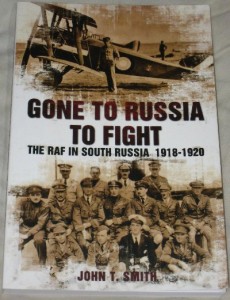
cover-gonetorussia
Cover of Gone To Russia To Fight.

The book has some neat period photographs from a variety of archives, including some fished out of the Russian archives in recent years. The writing is clear and readable, although Smith’s writing style, especially in the first few chapters, is staccato and choppy at times, with lots of short sentences, sometimes to the point where it seems like a grade-school textbook instead of an adult history book. The one major disappointment are the maps. There are only four in the whole book, none of which adequately cover the area discussed in the text. The detail map of one harbour on the Caspian repeatedly attacked by the RAF forces seems kind of pointless, given that a clear, full-page annotated aerial photograph is also included. Given the unfamiliarity of the theatre, the sometimes difficult Russian place names, and the fact that many place names have changed in the intervening 90-some years (making modern atlases or Google Maps unreliable), a few good detailed maps would have been a huge help.

The maps aside, this is an interesting and clearly written look at an oft-forgotten theatre, and Smith does a great job of going right back to primary documents to provide the clearest possible narrative of events 90+ years ago.

Gone to Russia To Fight: The RAF in South Russia 1918-1920 by John T. Smith, published 2010 by Amberley Press. £5.95 from Naval & Military Press. (normally £14.99, no idea how long the discount from NMP will last, but grab it while you can!)

The Shortest Possible Review: A fascinating look at an overlooked piece of RAF history, and a unique perspective on the Russian Civil War.

As a wargamer, I’m now fighting the urge to get some aircraft and some river boats and barges to try and recreate some of the actions from Gone to Russia. Maybe the 1/600 RCW ships from PT Dockyard and some 1/600 WW1 aircraft from Tumbling Dice or elsewhere? Must resist, not got the time or budget right now for a new scale!
Book Review: Notes for Infantry Officers on Trench Warfare

“The importance assumed by trench warfare… have rendered necessary special instructions in the details of trench construction and trench fighting.” — Ch1:1, Notes

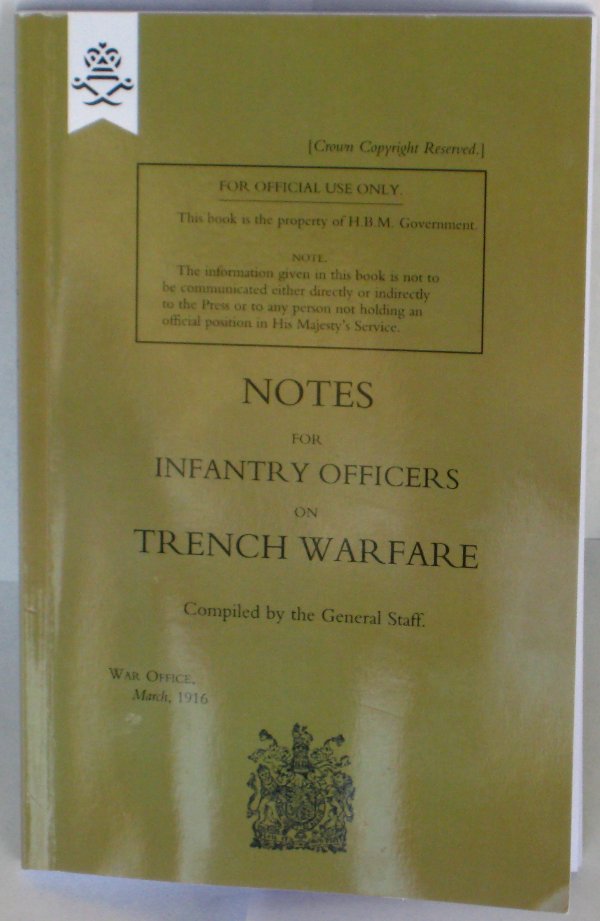
This is a modern facsimile reprint of an official 1916 British War Office publication, published by Naval & Military Press. You can find scanned PDF versions of this document online, but I took advantage of NMP’s Easter sale to get a printed version very, very cheaply. It’s a small paperback, roughly 7″x5″ and 78 pages long. (I talked about my experience ordering from NMP previously.)

It was compiled by the British General Staff in March 1916 as a training and reference guide for, as the title says, officers in the trenches of the Western Front. The five chapters comprise an introduction, a long chapter on the construction and maintenance of trenches, the daily routine of trench warfare, defending trenches, and finally the attack in trench warfare. The book finishes off with a couple of appendices, thirty-five diagrams, and a short index.

notestrench
Cover of NMP’s reprint of “Notes for Infantry Officers on Trench Warfare” of 1916.


The writers repeatedly remind the reader that trench warfare is “only a phase of operations“, and that “(t)he aim of trench fighting is, therefore, to create a favourable situation for field operations, which the troops must be capable of turning to account.” While this is technically true, it took until the last few months of the war in late 1918 to come true, and remember that Notes was published in March of 1916 — that trench-bound “phase of operations” lasted nearly two and a half years…

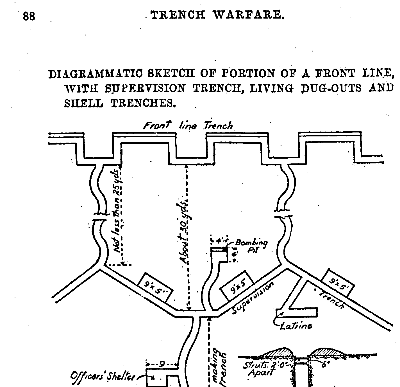
From a wargamer’s point of view, there are two major ways that books like this are valuable. The first is for period flavour and scenario inspiration; something as simple as knowing how a trench network was laid out or the basics of how it could be attacked or defended can inspire a scenario. Small details like the note in the appendix on communication on not routinely taking field telephones right up to the forwardmost trenches, lest the trench be rushed and the enemy able to tap into the field telephone network without anyone being the wiser back at headquarters could inspire quite detailed trench-raid scenarios, with more detailed and more interesting objectives than simply “kill the other guy”.

trenchdiagram
Sample illustration from Notes, showing part of a basic front line and support trench setup.


The second (and related, of course) way this type of book is useful to wargamers comes mostly in those 35 or so diagrams in the back of this little booklet. If you’re considering building trench scenery or fieldworks of any sort, knowing the “standard” ways the British Army expected things to be done is obviously valuable. The diagrams cover frontline, support, and communication trenches, various sorts of dugouts, several types of machine-gun nest, wire and obstacles, and more. If you’re going to pull a Roundwood and build up a bunch of trench boards, this inexpensive little booklet could be a valuable starting point.

Notes for Infantry Officers on Trench Warfare, (British) War Office, 1916, reprinted by Naval & Military Press. £7.50

The Shortest Possible Review: If you want a basic WW1 Western Front reference, get this.

Note that there is also a May 1917 version of this booklet, with exactly the same title, but printed by the American War Department as they geared up to finally join the Great War. As far as I can tell the text is largely identical to the earlier British edition discussed above, but the value of the later American version is the hugely expanded number of diagrams in the back. The book has gone up to about 160 pages from 75 or so, and a huge amount of that is new diagrams. You can download a good, complete PDF of the War Department version over on the US Army’s Combined Arms Research Library website – Notes for Infantry Officers on Trench Warfare 1917. To get the PDF version easily, use the blue “Download” button on the far right-hand side of the screen.

A Zeppelin Baggage Sticker

I haven’t posted one of my “World More Pulpy” graphics in ages, but here’s something that’s been lurking on my harddrive for ages and needs some fresh air.

Here we have the luggage label for a piece of First Class Cabin Baggage on the American-Pacific Airship Company’s famous “Luxury Airship to the Orient” routes.

baggagesticker
Luxury zeppelin to the Orient! Well, in an alternate world, maybe. One without a fireball at Lakehurst, perhaps.

There were supposedly American companies considering trans-Pacific airship routes at one point; the Great Depression scuttled the first round and then there was that fireball at Lakehurst…

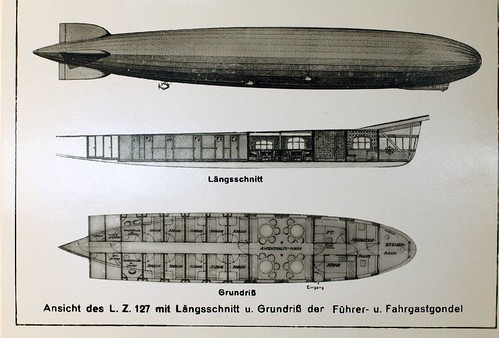
Here’s a couple of real photos from the actual Graf Zeppelin herself just as bonus content. These are once again from the spectacular Flickr Commons account of the San Diego Air & Space Museum Archives. The GZ’s cabin in profile and plan, from a postcard:

Zeppelin

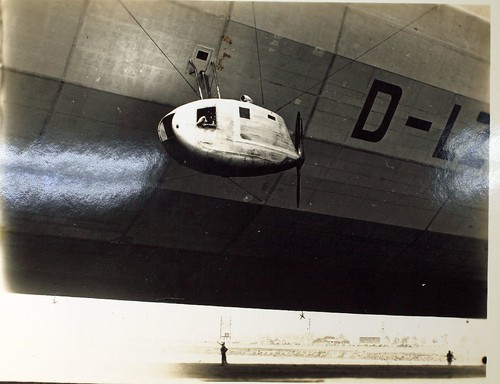
…and a detail shot of the elegantly streamlined engine gondolas of the Graf Zepp:

Zeppelin

I actually have a couple of pulp figures on the painting table currently, the first in far too long, so perhaps I’ll get back to some pulp-flavoured posts here soon, in amongst the blizzard of Russian Civil War material recently!

Links of Interest, 7 June 2012

Been a bit quiet around here recently; blame a very strange and fractured work schedule for that, mostly, as well as the fact that I’ve got a whole bunch of projects (RCW sailors and cavalry, among other things) in the fairly early stages of development and thus not suitable for showing off here! Progress is being made, though, and I have another Russian Civil War game planned for later this month, so that’s my deadline for the horses and sailors, at least!

To tide you over (and because they relate closely to an upcoming terrain project I’m planning…) here’s a pair of useful links, both from the Empire of Ghosts blog.

The first is Tutorial: Making Barbed Wire and Minefield Obstacles. He’s building for 15mm WW2, but the basic technique is universal, and I happen to have several salvaged sheets of 3mm MDF around the place…

The second and related is Tutorial: Making Realistic Barbed Wire Cheaply, which results in good looking barbed wire with the aid of a couple of sizes of thin wire and a drill. I’m not sure I’m going to be using this technique (I have another plan that might be even easier…) but it looks good.

More actual content soon, I promise, and Corey has several projects underway that he has promised to write up as well.

Interwar Iraq (and elsewhere)

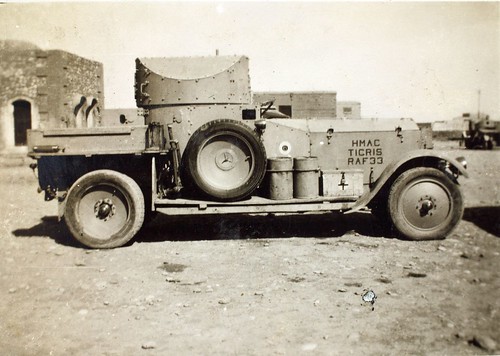
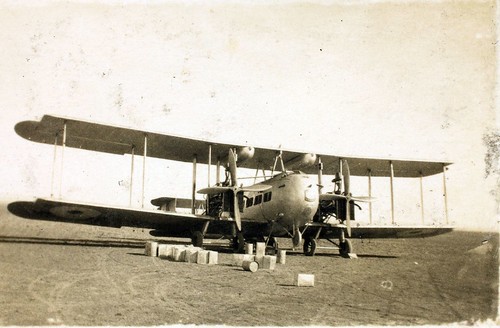
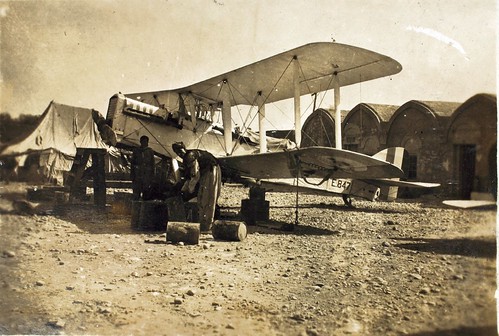
I’ve previously posted images from the San Diego Air & Space Museum Archive’s Flickr account, but they’ve just uploaded nearly one thousand images from a former RAF member who served post-WW1 in Iraq, elsewhere in the Middle East and in the UK.

The full collection starts here on Flickr and goes for 13 pages so far.

Here’s a random selection of images that caught my eye on a first run through the collection!

Armoured car

Excavations

Palestine: Vickers Vernon which took me from Cairo to Baghdad

Refueling my machine in the Serai

Lots more great images in that collection, head over to check it out!

Cossacks, Dragons, Cavemen and Others…

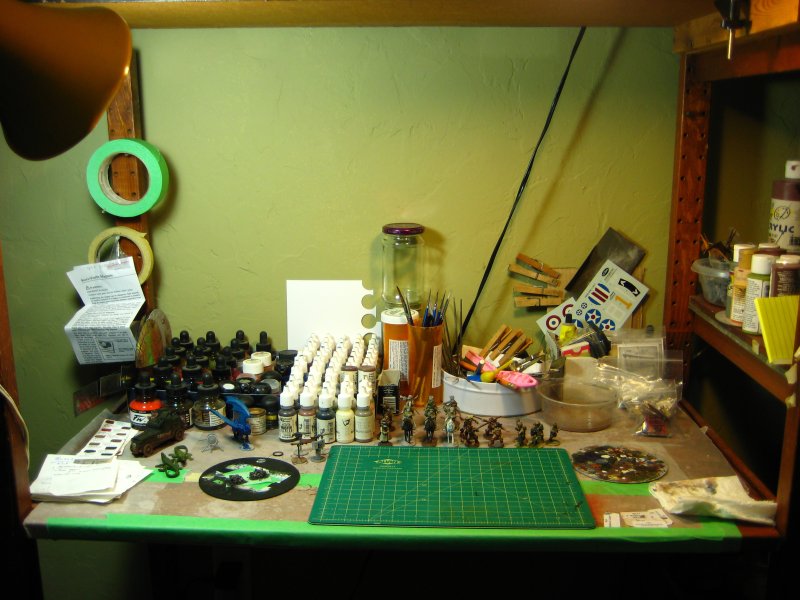
I’ve had a bit of a slowdown in painting and general wargaming involvement lately; partly this is because I haven’t had a game of anything in ages, and partly it’s been down to my painting bench being a horrifying clutter of finished models, scrap and offcuts left over from scenery projects, real-life clutter like spare sunglasses, and general disarray… so this evening I sat down to get it all sorted out.

The finished figures went into cases finally, then I cleared one section of the desk at a time, ruthlessly threw away all the garbage (even most of the offcut bits that “might be useful one day”..) and imposed some order on the place.

bench29may
My painting and scenery desk, cleaner and more organized than it's been in ages!

A quick tour, from the left rear corner… the black caps are FW & Rowney artist’s acrylic inks, the white caps are my ever-growing Reaper Master Series paint collection, and there’s a random assortment of GW, old Ral Partha and other paints in the gap between the inks and the Reaper paints. The good paintbrushes live in the old superglue bottle at centre, with the new superglue lurking behind. The round white cookie tin is the tin of tools – Xacto knives, needle files, old beaten up paintbrushes, tweezers, and on and on. Finally in the back right, that small box has spare Xacto blades, putty, glues and other tools.

Front left has my painting swatches (very useful strips of white card with small rectangles of most of the colours I own painted on and labelled), scrap paper to take notes on paint schemes, then the random assortment of miniatures around the cutting mat that give this post it’s title. There’s a Reaper dragon, Russian Civil War Cossacks from both Copplestone and Brigade, some Copplestone cavemen, four Pulp Figures deck guns, and a few random figures just to round out the collection. On the right is my painting palette (a used CD) and a folded paper towel to wipe brushes on.

I’ve decided that one of this summer’s projects is going to have to be a shelf set of some kind to go at the back of my painting desk and give me space to better organize the paints and other stuff. Hopefully a cleaned up and reorganized painting area will get me applying the brush to miniatures again, I’d like to finish the Cossack cavalry in the next couple of weeks for a mid-June RCW game!

Sales of Possible Interest

A quick late night post to alert faithful readers to two short-duration sales of possible interest.

First, in honour of Her Majesty’s Diamond Jubilee, TooFatLardies has 25% off everything except figures until next Thursday the 31st May. A grand chance to stock up on that TFL rulebook you’ve been considering, or grab a couple of their excellent Specials, which are stuffed full of all sorts of goodness. I’ve just topped up my collection of Specials, so I now own everything TFL has ever published for Through the Mud & the Blood…

Secondly, in honour of the American Memorial Day weekend, Brigade Games, maker of (among a huge list of other things!) excellent Russian Civil War 28mm figures, have a deal until the 28th May: orders over $30 US can get a 10% discount by plugging the code “HONOR” (note American spelling…) in while you’re completing your transaction. I won’t be personally taking advantage of this one, but if you’ve been thinking of a new RCW force, or something else from that huge list of good stuff Brigade sells, now might be a good time!

Speaking of Brigade, I badly need to finish the long review article I’ve got on their Storm in the East RCW/WW1 Eastern Front figures. You’ve seen them here as my White Russian forces, but they’re nowhere near as well known as Copplestone’s famous Back of Beyond range. There are some very nice figures in the Brigade range, though, as nice as anything Copplestone put out, and they fit together beautifully on the tabletop. I’ll make time early next week to put the finishing touches on that writeup and get it published here.

Have an excellent weekend, no matter what your excuse for a party is!

Horse Painting

As I predicted when I linked to it, the very nice Games Workshop tutorial on painting horses has vanished from their website, which is a shame. Thankfully, there’s other good resources out there for horse colours and markings.

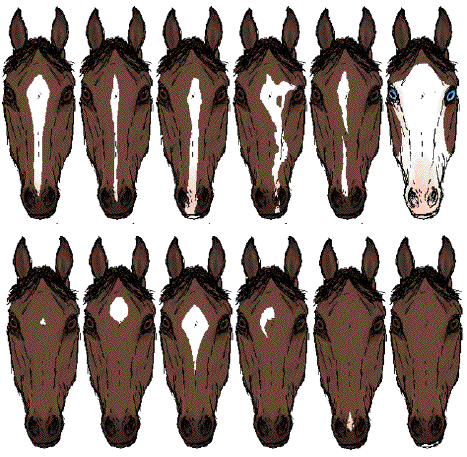
Via Wikipedia, a useful little graphic of the stripes, blazes and other markings horses can have on their heads. A scattering of this sort of thing amongst your cavalry really adds character.

First of all, Wikipedia’s very useful article on Horse Markings has great diagrams of the variety of face, leg and body marks horses can have, and the Equine Coat Colourarticle, while not as nice as the markings one, at least has some good pictures of varieties of horse colour.

Veni Vidi Vici has some scans from an old children’s book of horses that nicely lays out the basic colours the beasts can have.

Steve Balagan has found some very nice photographs of horses to illustrate his Wargamers Guide to Horse Painting with, too.

All of this is, of course, in aid of me adding some 28mm cavalry to my Russian Civil War forces. More on that soon, I hope!

Russian Civil War Sailors (and post #200!)

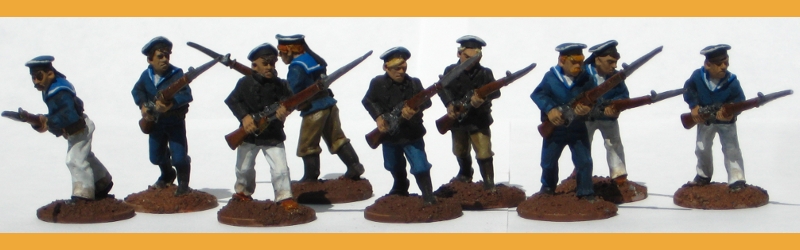
I speed-painted these guys in about two evenings back in March so they could add a bit of colour to the Russian Civil War game I ran at Trumpeter Salute, but haven’t gotten photos of them until now.

The figures are Copplestone’s Bolshevik Sailors, although at this point they could fight for either side; the Whites had sailor-infantry too, although nowhere near as well known as that of the Reds. I painted them up in fairly pristine naval uniforms, which is probably slightly more Hollywood than historical, although the various naval units were known to cling to their unique insignia and uniforms in the field — they did have a reputation to maintain, after all! I have to give credit to other people who’ve painted these figures up beautifully, especially over on Lead Adventure, as I cribbed freely from their photographs to get these sailors looking good and fairly accurate.

sailors_16may
A section of Russian sailors for my RCW forces. All figures by Copplestone. Click for full-size, as usual.

The colourful naval uniforms help break up the unrelieved khaki mass of my Reds; my Whites get their colour from the plaston of Cossack infantry that forms about half of my current White. The sailors will get another round of highlighting at some point, likely when I paint up the new sailors I recently ordered from Copplestone. The faces and blue uniform items especially could do with another highlight. Still, not bad for pre-convention speed painting, I think!

Two Hundred Posts!

This post also marks the 200th post here on the Warbard! Not bad for less than 18 months of activity in this format, is it? We had a big burst of activity right at the beginning as I turned content from the old site into posts and caught up on a backlog of stuff I’d never documented, but still the average is somewhere around three posts per week.

That’s 200 posts published (plus about a dozen in-progress ones lurking in the background), 250-odd images, 60 or so comments (about two-thirds from actual readers, the rest from myself or Corey replying to those posts) and 5000+ spam comments, only a few of which ever actually got out into the site, the rest died in Akismet or the moderation queue.

Onward and upward; here’s to the next two hundred!

Armstrong-Whitworth Armoured Car, Finished

Finally got the Russian Civil War Armstrong-Whitworth Armoured Car from Copplestone completed and photographed. The new monitor and computer I set up ten days ago helps hugely with good photos, not only is processing them faster the new brighter monitor makes contrast and colour balance easier to sort out. (oh, and I remembered how to set custom white balance on my camera again, which always helps picture quality and reduces the amount of work you have to do on the computer afterward…)

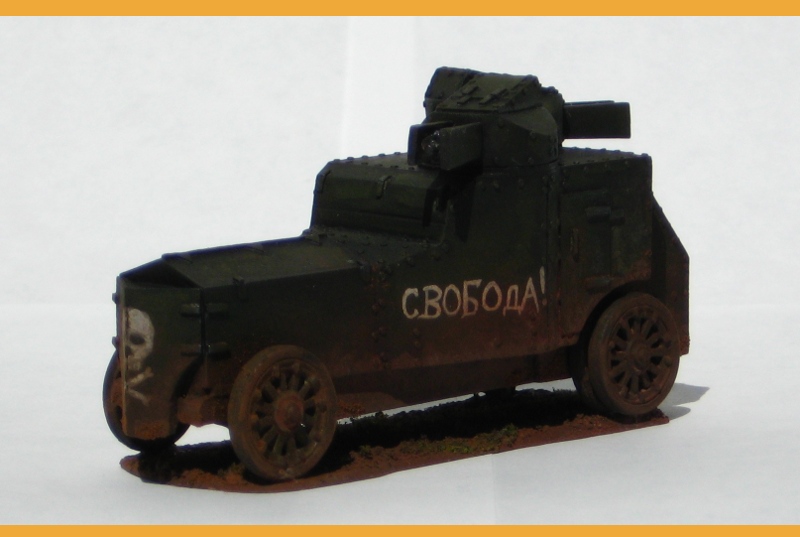
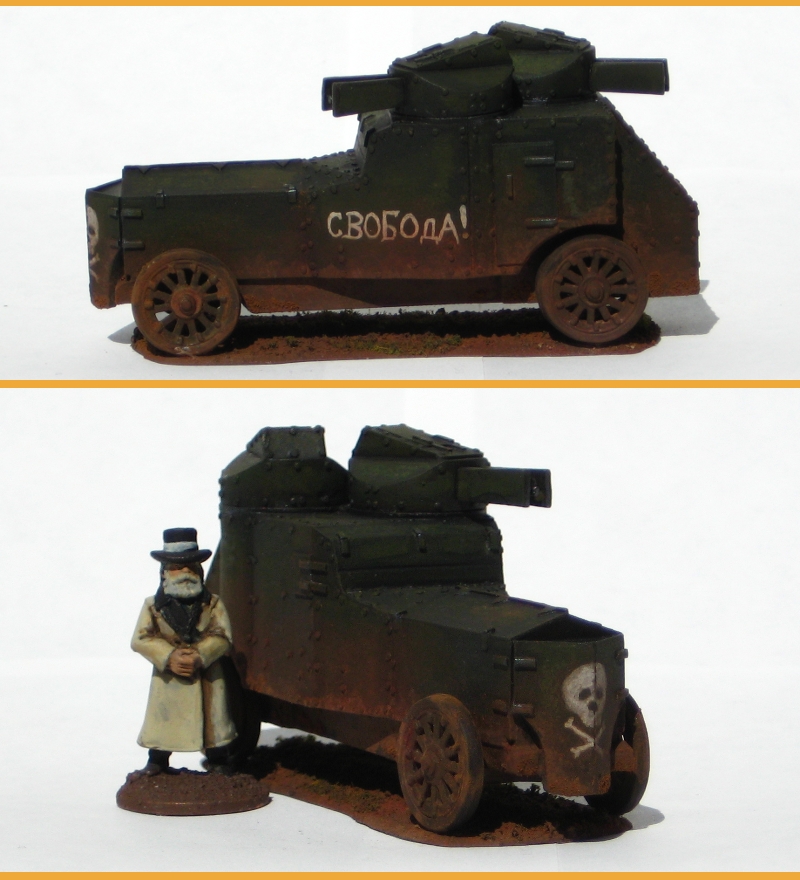
Anyway, the Russian armoured car “Freedom!”, suitable for appearing on nearly any side of the Russian Civil War, all finished and ready for the tabletop:

ac1_15may
Side and front views of the Copplestone Armstrong-Whitworth a/c; the priest is a Brigade Games 28mm figure.
ac2_15may
Oblique view of the car. Most of the weathering is pastel chalk dust.

Two related links, as well. Via Lead Adventure, a very, very high quality (and free!) booklet on vehicle weathering. Most of the techniques aren’t new, but it’s great to have them clearly illustrated in a free, high quality PDF.

Via GWP, this page on Austin armoured cars, mostly focused on the ones that wound up in Polish service but of course it talks about the ones built in Russia that were captured by the Poles. Great photos, including some unique ones I haven’t seen anywhere else.