Category Archives: Historicals

Historical and quasi-historical gaming of various sorts. English Civil War and Thirty Years War, the Great War (World War One), the Russian Civil War and other interwar conflicts, and whatever else we wander into!

The Invisibility of Good Rules

No, not rules for Frodo sneaking up on Smaug with that useful ring of his (although possibly related), but the trick of having good rules that you know moderately well become invisible in play, so that you concentrate on gameplay and tactics rather than the minutiae of the rules.

This was prompted by something Sean, our newbie Through the Mud & the Blood player, said right at the end of last Sunday’s M&B-powered Russian Civil War game. I’m paraphrasing slightly, but he said something to the effect of, “I liked that the rules got out of the way and let you just play the game, rather than having to stop every two minutes to look up some special rule or try to interpret something out of a Codex that seems to contradict what’s in the main rulebook.”

This struck me as a useful expansion on something I’ve mentioned here before and long held as a personal tenant, that you should value flow of the game and fun value over nitpicking details of the rules you’re using. The additional thought is that good rules will assist with this process rather than hinder it. This might seem obvious, but it bears pointing out.

I posted this to the TooFatLardies mailing list, and Richard Clarke, the author of the Mud & Blood rules, replied, “Music to my ears. I keep banging on about how rules should be as “invisible” as possible, so it’s good to hear stories like that one.”

Any set of rules, even the most complex RPG rules, can become relatively invisible if enough people in the group know them well enough, but elegantly written rules let you pull the trick off faster. Off the top of my head, two other rules systems that become nearly invisible in play and are also personal favourites are the old fantasy battle game Hordes of the Things (a variant of the famous DBA) and the fantasy skirmish system Songs of Blades & Heroes from Ganesha Games. It’s also one of the attractions of playing an unfamiliar set of rules at a convention, where the details of the rules are the referee’s problem and you can concentrate on getting your troops to do things and rolling the dice when the ref tells you to.

Anyone got any other “invisible” rules to recommend, ones that get out of your way and let you concentrate on tactics and flow instead of the rules?
Back in the Proto-USSR

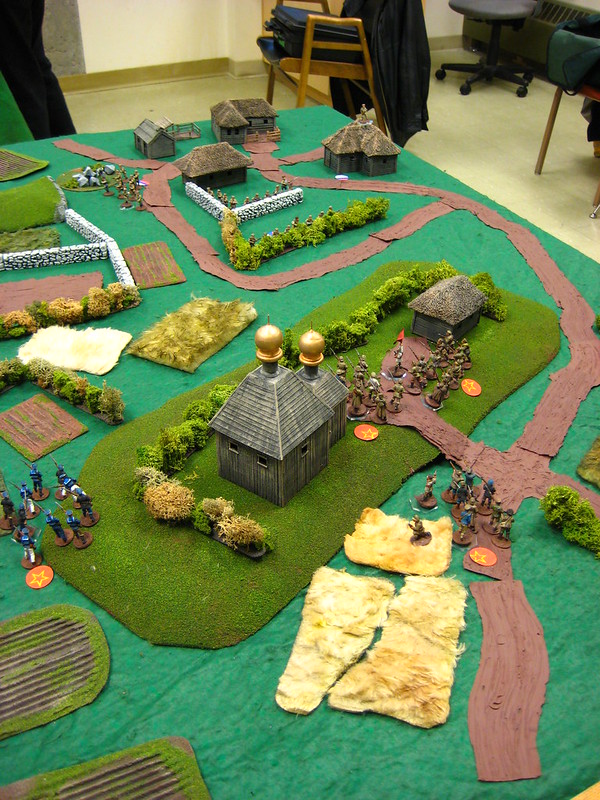
Ran my first miniatures game in ages yesterday (Sunday), with a friend running the defending Whites and a co-worker/friend who’d never played Through the Mud & the Blood before running the attacking Reds. I gave the attackers about a 30% manpower advantage, although they were short of decent officers (as the Reds tended to be, especially earlier in the Russian Civil War).

RCW wargame photo
Back in the Not-yet-USSR — click on the image to view larger over on Flickr.

The photo is from fairly early in the game, with Sean’s Reds working their way around and over the ridge with the chapel of St. Boris the Intoxicated on it. The Reds wound up taking up a firing line along the hedges on the far side of the ridge and clearing the hamlet beyond with sheer weight of fire, while the Red sailors on the far left worked their way across the hedges, trying single-handedly to assault the right flank of the White village. Supported by fire from the ridge they did succeed in destroying one White section entirely, but at ferocious cost to themselves – nearly 50% casualties. Other Red casualties were fairly light, while the Whites got pasted, taking at least 30% casualties to their entire force, two rifle sections rendered non-functional and the other two withdrawing at the end of the game with a few casualties each.

While both players had fun, and so did I, I’ll do a few things differently next time I run a game like this. I should have thrown a Reinforcements card into the deck for the Whites, with some reinforcements (another rifle section or two, or maybe something more potent like an armoured car) coming in after X turns of that card. I was also shocked at how rusty I’d become about the M&B rules. We did movement through rough ground wrong for the first few turns, which really made the initial Red advance a slog — thankfully they were mostly sheltered behind the ridge, so the only effect was to make the first few turns more boring! Thankfully, everything I got wrong affected both sides more or less equally, so while it irritated me it didn’t screw the game up too badly.

Sean, the Red player, had never played Mud & Blood before. I’m not sure, but this might have been his first non-GW miniatures game ever. He’s stoked for more, enjoyed the rules, and I’m sure we’ll have him back in the proto-USSR in the New Year. He said some interesting things about Mud & Blood that I’ll expand upon in a future post, too.

Further Great War Resources

Over a year ago, in July 2011, I wrote a long article called Great War Resources with links to the Internet Archive and other places you could find resources of interest to Great War/World War One wargaming.

Here’s a bit of a long-delayed followup, the result of an evening wandering the (virtual) aisles of the US Army’s Combined Arms Research Library (CARL) website. My original post mostly had material from the Internet Archives and just a bit from CARL, as I’d only just discovered that resource. CARL material is biased toward the last two years of the Great War, 1917 & 1918. Given that this is an American military library we’re using, it’s only natural it would have more material for the years when the Americans finally realized there was a war on and joined in. Also, there was a huge outpouring of studies and material from all the combatants as the war ground onward, and as I mentioned in my original article, on the Allied side lot of it was deliberately aimed at bringing the newly-arrived Americans up to speed as rapidly as possible in the harsh environment of the Western Front.

To get the best PDF files quickly from a individual CARL listing, use the pale blue “Download” button on the far right of the page, opposite the title. That’ll get you a PDF with a human-readable filename, which is useful. Using the red-and-white PDF symbol gets you the same file, but with a random alphanumeric filename, kind of hard to keep track of once it lands on your own hard drive!

The following links are a few from the CARL Obsolete Military Manuals collection I happen to have noticed that might be of interest.

One easy way to sort through the Obsolete Military Manuals material is to sort by date of original publication. I can’t find a way to save links to specific searches (they time out) but use the Advanced Search dropdown on the top bar (beside the search box) and then use the Search By Date function at the bottom of that dropdown. There’s a few random bits and pieces in the 1914-1916 range, then a positive explosion of material from early 1917 onward.

Found any treasures on CARL or elsewhere that I haven’t mentioned? Post them in the comments, please! (Note that comments are moderated, especially if they have multiple links in them, but I do check up on the moderation queue regularly!)

Dogs of War

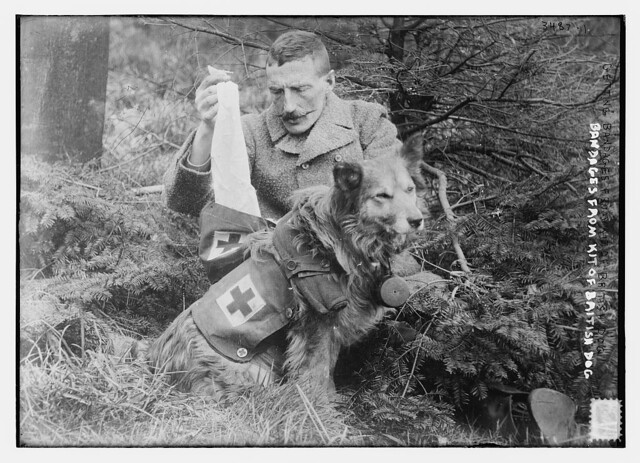
No, not the Warhammer-universe mercenaries, but the real thing, in real-world wars. The Library of Congress’ excellent Flickr account, where they share all sorts of treasures from their huge photo archives, put this image up earlier this year:

British Ambulance Dog, WW1
"Getting bandages from kit of British Dog (LOC)" via the US Library of Congress on Flickr. Click to go to the original Flickr page to see larger images.

"The animal seeks for wounded men lost on the battle-field; he searches in holes, ruins, and excavations, and hunts over wooded places or coverts, where the wounded man might lie unnoticed by his comrades or the stretcher-bearer."

That lead to some Google searching and the discovery of several interesting articles about military dogs on the Western Front, primarily as ambulance dogs or messenger dogs. There’s another LoC image on Flickr that has some very good links in a comment just below it, a few of which I’ve reproduced here.

The fascinating Out of Battle blog has a pair of posts from 2008, one on messenger dogs and the other on ambulance and other uses of dogs, with some further links and resources. Over on the always-valuable Internet Archive there’s a 1920 book called British War Dogs, Their Training and Psychology, downloadable in the usual variety of formats, including PDF with the original illustrations and diagrams.

I’m not (yet!) into Western Front Great War gaming, but if you wanted a unique unit amongst your trenches, a dog and handler could be done quite easily with a spare infantry figure and a dog — quite a number of manufacturers make dogs in both 15mm & 28mm. From the look of the period photos, most of the dogs were collie or terrier types, not very large, which makes sense. The ambulance packs could be sculpted with a bit of milliput or greenstuff, and a messenger collar would be even easier to add.

Unleash the dogs of war!

What I’ve Been Up To Lately


Bit of a slow summer here on the Warbard, and in gaming in general for me. I haven’t touched a paintbrush since June (or possibly May…) and while I’ve done a bit of scenario design and a lot of reading, most of my actual gaming time has been taken up with the Savage Worlds RPG rules and planning a possible fantasy RPG with Savage Worlds. We shall see how it goes, as always, and I do want to get back into painting soon, I have Russian Civil War sailors and some cavalry to finish!

Two New Books: Britmis & The Great War on the Western Front

My most recent order from Naval & Military Press showed up this week; just over three weeks enroute isn’t bad for surface shipping from the UK to western Canada.

This time I got Britmis: A Great Adventure of the War and The Great War on the Western Front: A Short History.

Britmis is an NMP republication of Major Phelps Hodges’ memoir of his participation in the British military mission to Siberia during the Russian Civil War and subsequent escape through the Gobi Desert to China when the Russian Civil War started going very badly. It has the gloriously Edwardian sub-sub-title “Being an account of Allied intervention in Siberia and of an escape across the Gobi to Peking”, and in addition to being interested in the Russian Civil War generally, I’m a sucker for any book with sub-sub-titles or chapter sub-titles that start with “Being an account…”, so I expect Britmis to be a fun read.

It’s a chunky little trade paperback, 365 pages or so and includes photographs taken by the author during his adventures. I read Beasts, Men and Gods in e-book a while ago, and Britmis looks to have a lot of the same flavour and interest!

The Great War on the Western Front by Paddy Griffith is one of the standard modern texts on the Great War, “revisionist” in the best sense as Griffith works away at the old myths that the Western Front was nothing but pointless slaughter and stupidity. I won’t be getting to this one for a while, but NMP had it on sale at an absurd discount (their regular price is pretty good too, mind you!) so I couldn’t pass up the chance to add this one to my library.

Book Review: The White Armies of Russia

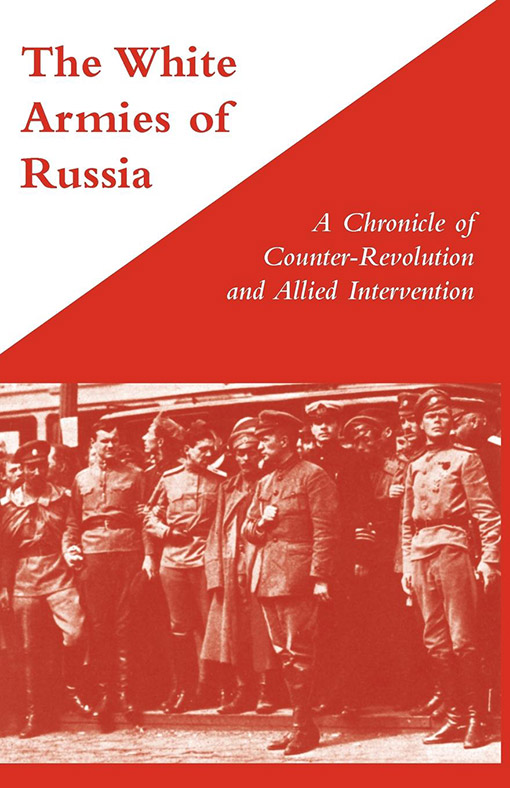
The White Armies of Russia: A Chronicle of Counter-Revolution and Allied Intervention by George Stewart is another modern reprint from Naval & Military Press, and was part of the same order I made to NMP back in April 2012. I’ve been reading it in fits and starts in between other books, but finally settled down to actually finish it about ten days ago.

“Brutality made Bolsheviks where none had been before.”

—p.288, White Armies

White Armies was originally published in 1933, so it’s not a modern book, but it is still one of the touchstone pieces of Russian Civil War history in English. When I asked about this book over on the TooFatLardies mailing list, Richard of TFL mentioned paying quite a lot of money for an original edition a few years ago and being happy to pay it, but thankfully these days NMP’s facsimile edition is available relatively cheaply. The book is 470 pages or so, paperback, and seems solidly bound. The original photographs and maps are included, although quality of these (as NMP warns for all their facsimile editions) is not quite up to modern standards. This is especially frustrating on the maps, which are numerous and were apparently most drawn by the author or commissioned by him for the book. Many of the reprinted maps have a lot of barely readable tiny print, though, which makes them hard to use. That aside, in a conflict as sprawling as the RCW, it’s nice to have any sort of map to try to follow the action with!

White Armies of Russia. Book cover image from Naval & Military Press.

The book is focused, as the title implies, almost exclusively on the actions and personalities of the White movement(s) in Russia, and on the various non-Russian groups that interacted with them — primarily the Czech Legions and the British, American, French and Japanese interventionist forces. Stewart has an obvious distaste for Bolshevism, but he pulls no punches describing the corruption, brutality and ultimate failure of the Whites.

The book is laid out roughly chronologically, starting with the first (February) Revolution and the beginnings of the counter-revolutionary movements and moving on from there. Each chronological section has, generally, a chapter on each of the main theatres of the RCW (Murmansk/Archangel/the North, the North-West, the Southern/Ukraine/Crimean, and Siberia, broadly speaking). This book design does make following a single theatre all the way through the war a bit of an exercise in hopping around in the book, but it’s hard to see how to avoid either chronological or geographic dislocation when attempting to tell the story of the entire RCW in one book.

The White Armies of Russia by George Stewart. 2009 NMP reprint, original publication 1933. £16.00 at NMP, less if you get it during one of their regular sales.

The Shortest Possible Review: One of the classic histories of the White movement during the RCW, and still a good single-volume history decades after it was written.

Given how focused White Armies is on the White experience, I’d be curious to hear recommendations from readers on a similar book focused on the Bolsheviks and Red Army, to fill in the gaps, so to speak. Suggestions in the comments, please!

Airships for Lenin!

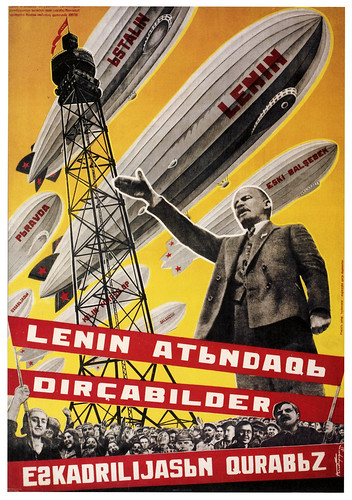
A bit later than the Russian Revolution/Russian Civil War-era Russian history that I usually post about, but it overlaps so beautifully in our pulp interests here on the Warbard that I can’t resist. Behold, a poster urging Russians to build airships to glorify Lenin’s memory!

A Fleet of Airships for Lenin

Via Paul Malon’s Flickr account, where he posts all sorts of awesome scans, from Soviet propaganda like this to western consumer advertising. The graphic arts of the pre-WW2/post-Revolution early Soviet era was fascinating, all sorts of very creative things happening in Russia at the time, despite all the problems the country was facing. That creative modern art was actually one of the things that first got me interested in the interwar period and Russian history of the time, as back in college I had an art history teacher who had done her Master’s on Russian art and graphic design of that era and passed her enthusiasm on to her students.

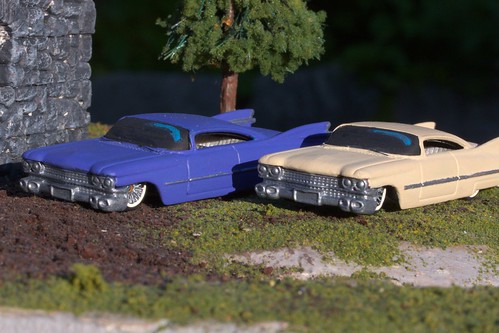
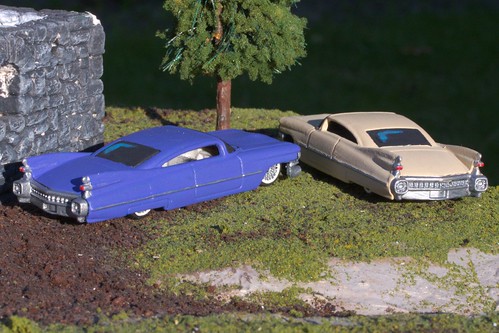
And now for something completely different: two Cadillac ’59s

Brian and I avoid most post-WW2 gaming as a general principle (we just don’t find it all that exciting) but the one part that holds any interest for me is retro-future post-Apocolypse ala Fallout. Given I am a sucker for cars, I picked up these two on a lark during one of my many runs to the second-hand store. They have been completely repainted. Enjoy!

Front of the two '59 Cadillacs
Front of the two ’59 Cadillacs

Rear of the Cadillacs

World War One Aviation Resources

Via (of all the random places) a MetaFilter discussion of WW1 flight sims, four zip files full of PDFs of public domain World War One flying books, about evenly split between period reference books and memoirs/biographies/autobiographies.

Handily, there’s a list of which titles are included in each zip file, so you could use that list, head over to the Internet Archive yourself, and pull individual titles of interest out for yourself.

Or grab the zip files, of course, and instantly have a pretty complete library of Great War aviation titles on your computer.